Frequently Asked Questions

Pressure washing and power washing are similar yet different. Power washing uses hot water to blast away dirt and grime. Pressure washing uses cold water.

It is recommended to power wash your home 1-2 times per year to help reduce mold, bacterial growth, mildew, and stains. We offer annual cleanings every 6 to 12 months to keep your home looking fresh and clean.

Sidings, bricks, roofing, decks, gutters, and other outdoor structures can be pressure washed.

Our professional team can get your home looking clean and new in under two hours. Call our team to discuss your exact power washing needs to get an exact quote.

Liberty Power Wash has the training, equipment, and experience needed to do the job correctly. Hire professional pressure washers to reduce the risk of house flooding, damaged roofing, and more.

High pressure associated with pressure washers can harm certain surfaces. Before any job, we identify problem areas and determine the best power washing method to use.

We use equipment that can apply up to 3,500-4,000 psi of water pressure. To reduce the need for high-powered water use, our experts apply 100% environmentally-friendly cleaning agents to help break up tough stains, grease, oil, and mold. Using our specialty tools, cleaning agents, and equipment, we can reduce the risk of damaging surface areas.

We only use 100% environmentally-friendly, biodegradable cleaning agents to prevent damage to landscaping.

A grey deck can be improved with pressure washing. Weather can age wood quickly if it has not been stained and sealed. Pressure washing can help to get rid of the weathered look and bring out the natural beauty of your wood deck or fence.

Our team can do pressure washing in any weather. Other than in high winds and when it’s lightning, and temperatures above 32 degrees. While we prefer sunny, we can clean on overcast days and even rainy days.

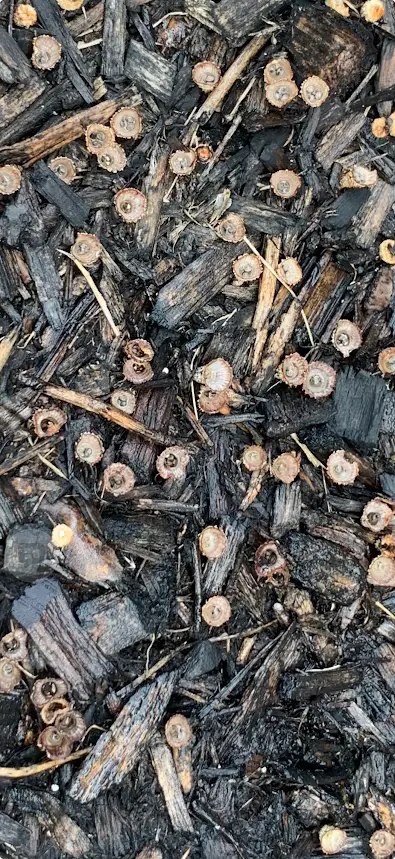
Shotgun fungus (Sphaerobolus stellatus) is a common artillery fungus that grows in mulch, decaying wood chips, and organic matter. It gets its name from its explosive spore-launching mechanism — it shoots sticky, tar-like black spore masses up to 20 feet away, and those spores bond permanently to surfaces like siding, brick, stucco, cars, and windows. WHY IT CANNOT BE REMOVED: Once shotgun fungus spores attach to a surface, they are nearly impossible to fully remove. The spores contain a natural adhesive that bonds at the microscopic level. Power washing alone — even at high pressure — cannot break this bond and can actually spread the spores and damage your siding. Scrubbing may only smear them deeper into porous surfaces. WHAT WE CAN DO: At Liberty Power Wash, we use a specialized soft washing technique combined with targeted cleaning agents to reduce the appearance of shotgun fungus spots as much as possible. While complete removal is typically not achievable, our treatment can significantly minimize visibility. The most effective long-term solution is to remove or replace the mulch near your home with rubber mulch, stones, or pine bark, which do not host this fungus. If you have shotgun fungus on your home, call us at 859-493-2664 for an honest assessment of what can be achieved. Shotgun Fungus (Sphaerobolus) on mulch - what it looks like

Oxidation on a house refers to the chalky, faded, powdery residue that develops on painted or vinyl siding over time due to prolonged UV exposure, heat, and weathering. When paint oxidizes, the binders break down and the surface becomes chalky — you’ll notice a white, dusty film that rubs off on your hand when you wipe the siding. Vinyl siding oxidizes similarly, losing its color and sheen.

SIGNS OF OXIDATION: A chalky or powdery residue on the siding surface; faded, dull, or washed-out color; white streaks especially on darker colored siding; and paint that comes off on your finger when rubbed.

WHY HIGH PRESSURE SHOULD NEVER BE USED ON OXIDIZED SIDING: This is critically important. High-pressure washing on oxidized paint or siding can permanently damage the surface in several ways. First, it can strip the remaining paint layer, forcing a repaint. Second, it can blast the oxidation layer deeper into porous siding or brick. Third, high pressure can dent and crack vinyl siding, break the seal around windows, and force water behind the siding, leading to mold growth and structural damage. Fourth, it washes away the remaining paint binding agents, causing the paint to peel even faster.

THE RIGHT APPROACH: At Liberty Power Wash, we use a low-pressure soft wash technique combined with specifically formulated cleaning solutions designed to safely remove oxidation, dirt, and mildew from siding without causing additional damage. Our process cleans your home thoroughly while protecting the integrity of your existing paint or siding finish. We always inspect your siding type and condition before beginning work.

If you’re seeing chalking or fading on your home’s exterior, call us at 859-493-2664 for a professional assessment.
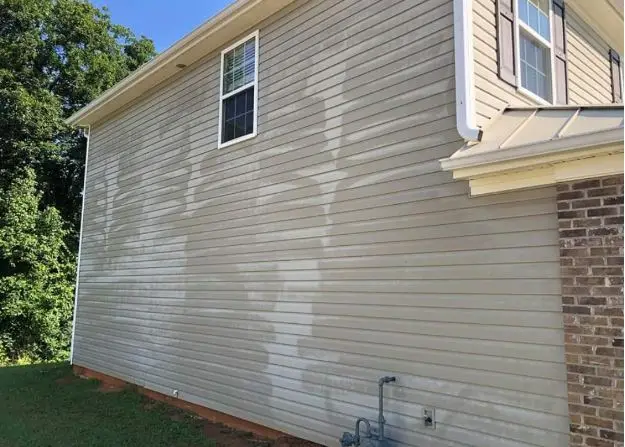
House siding oxidation example
Soft washing oxidized house siding - Liberty Power Wash approach